Photos
The real thing.
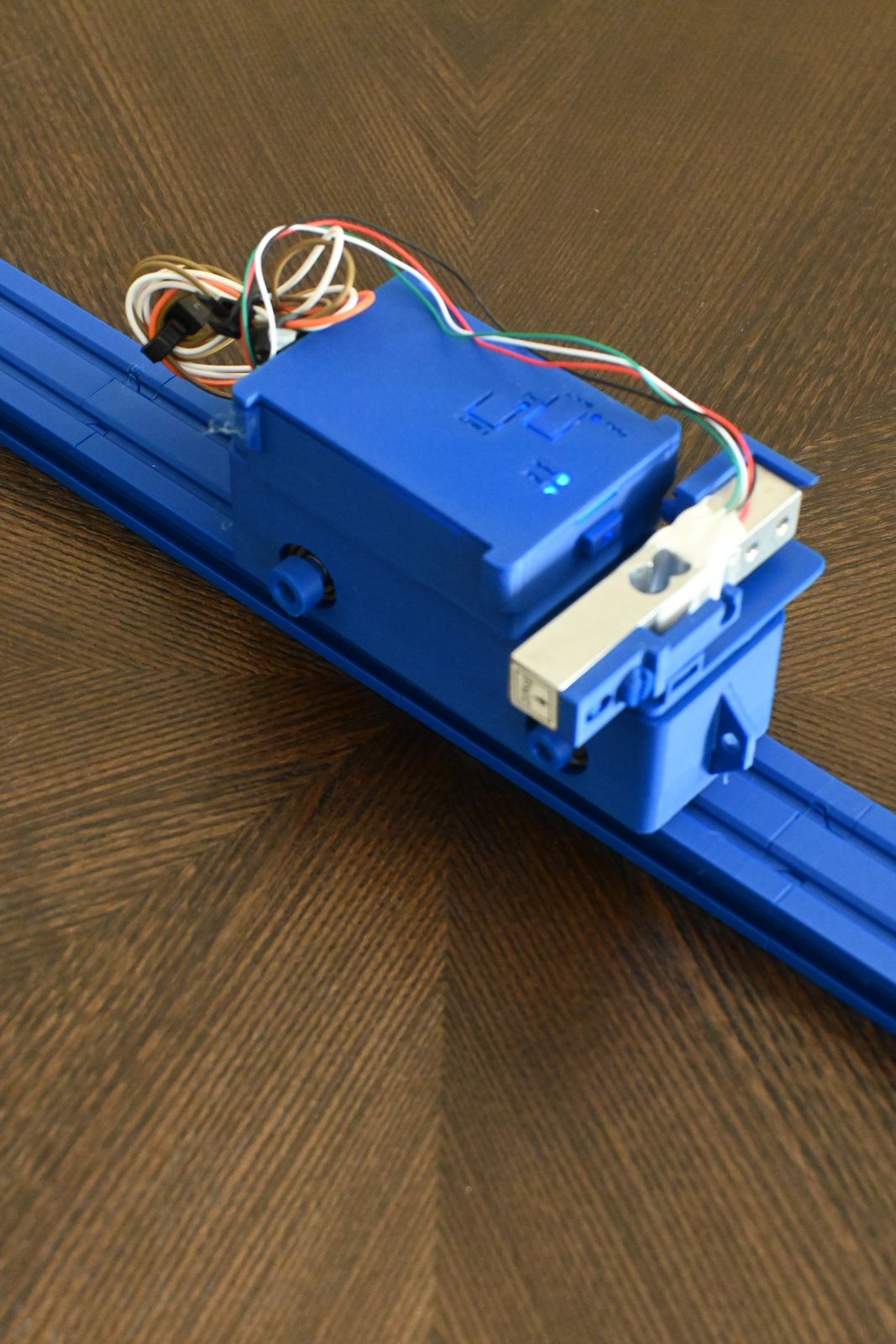
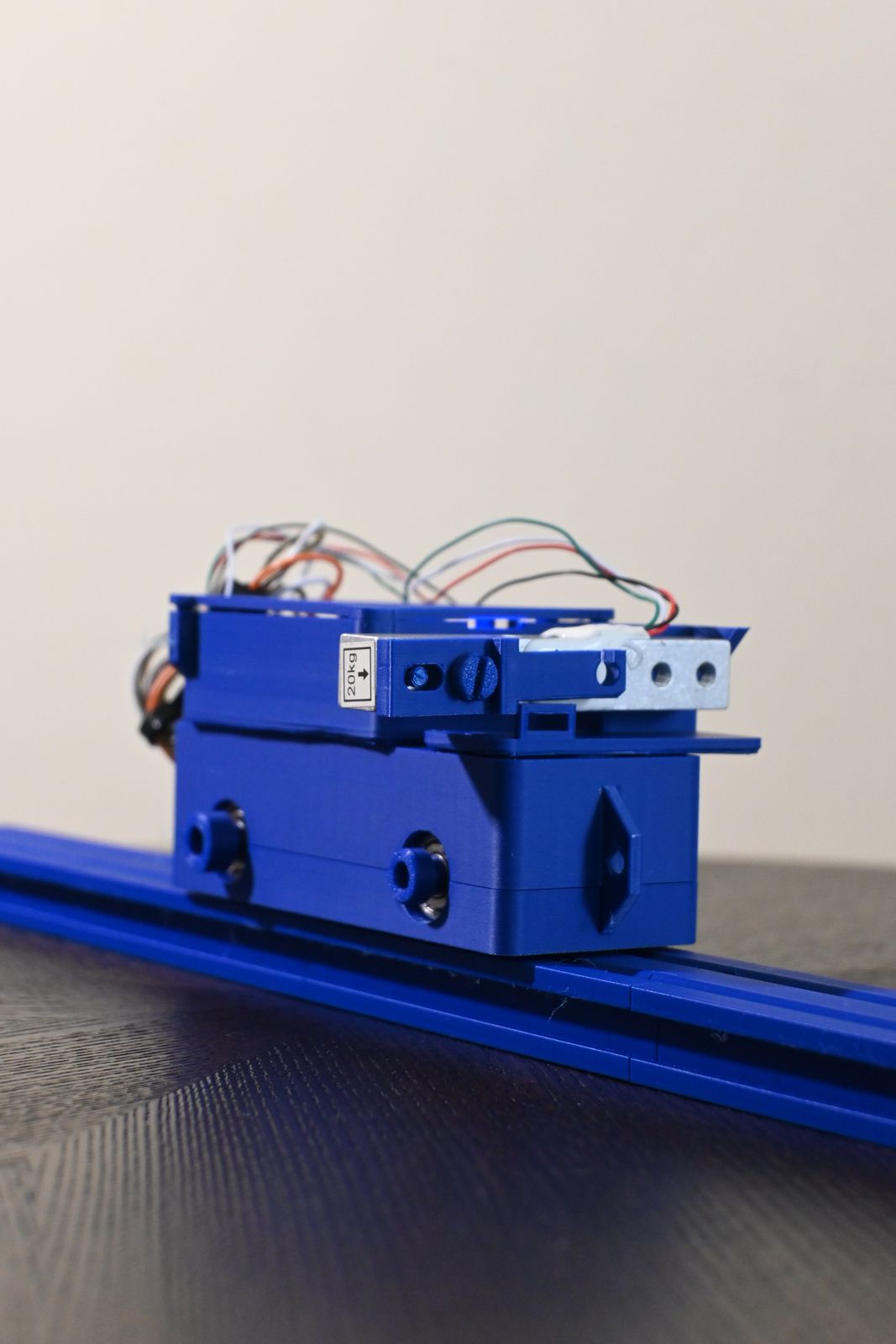
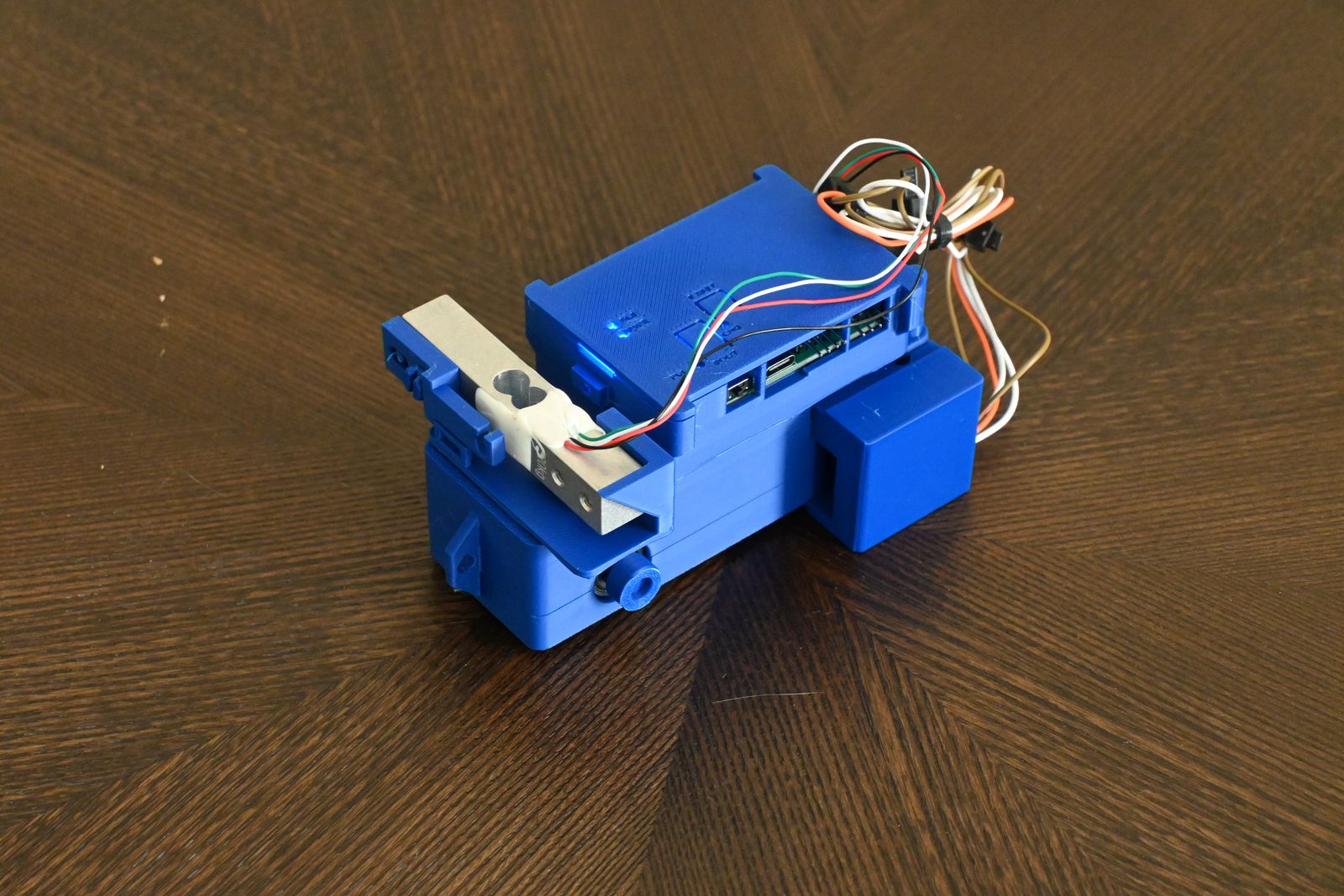
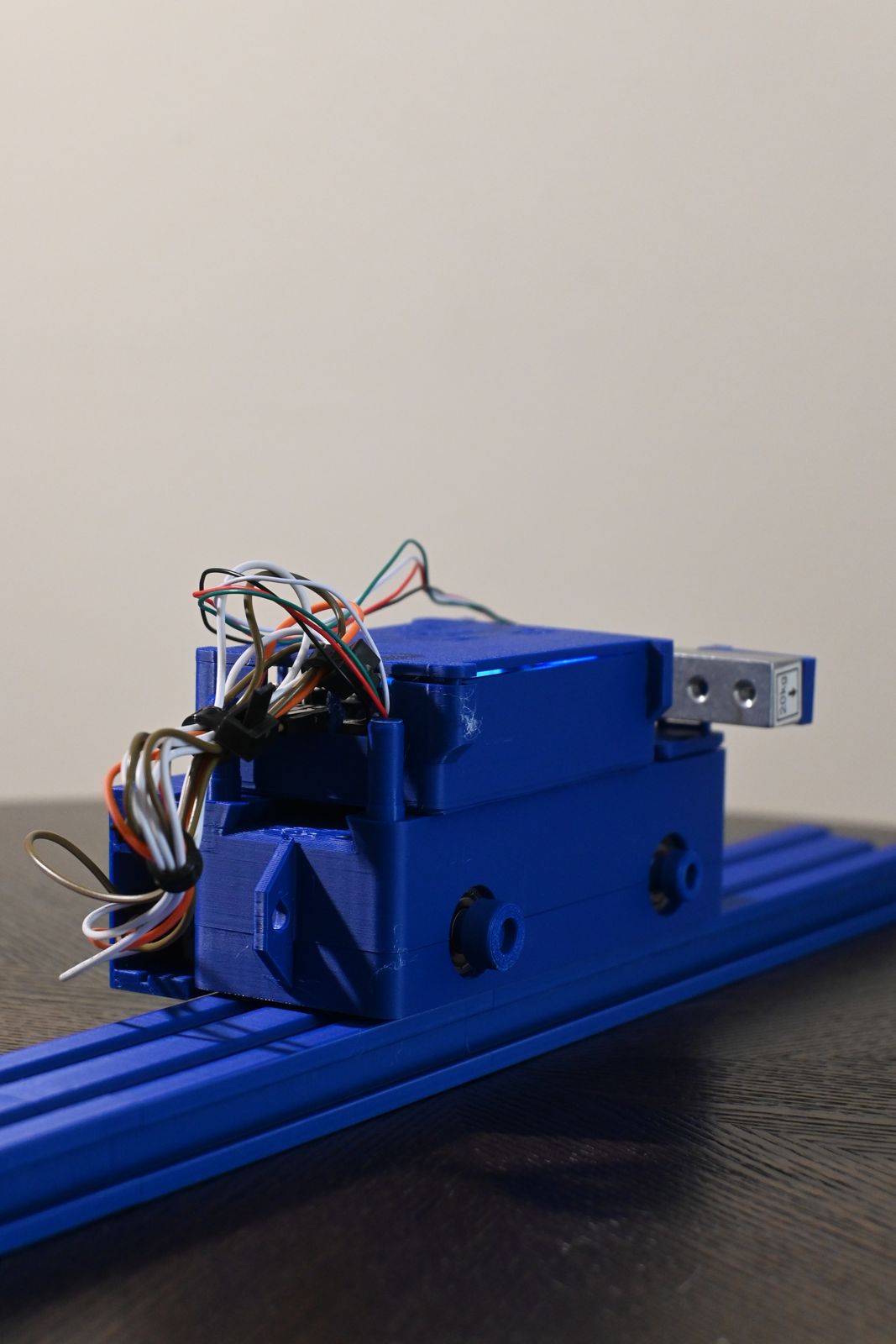
No renders here. This is the cart and rail as printed and wired, photographed on a dining table.
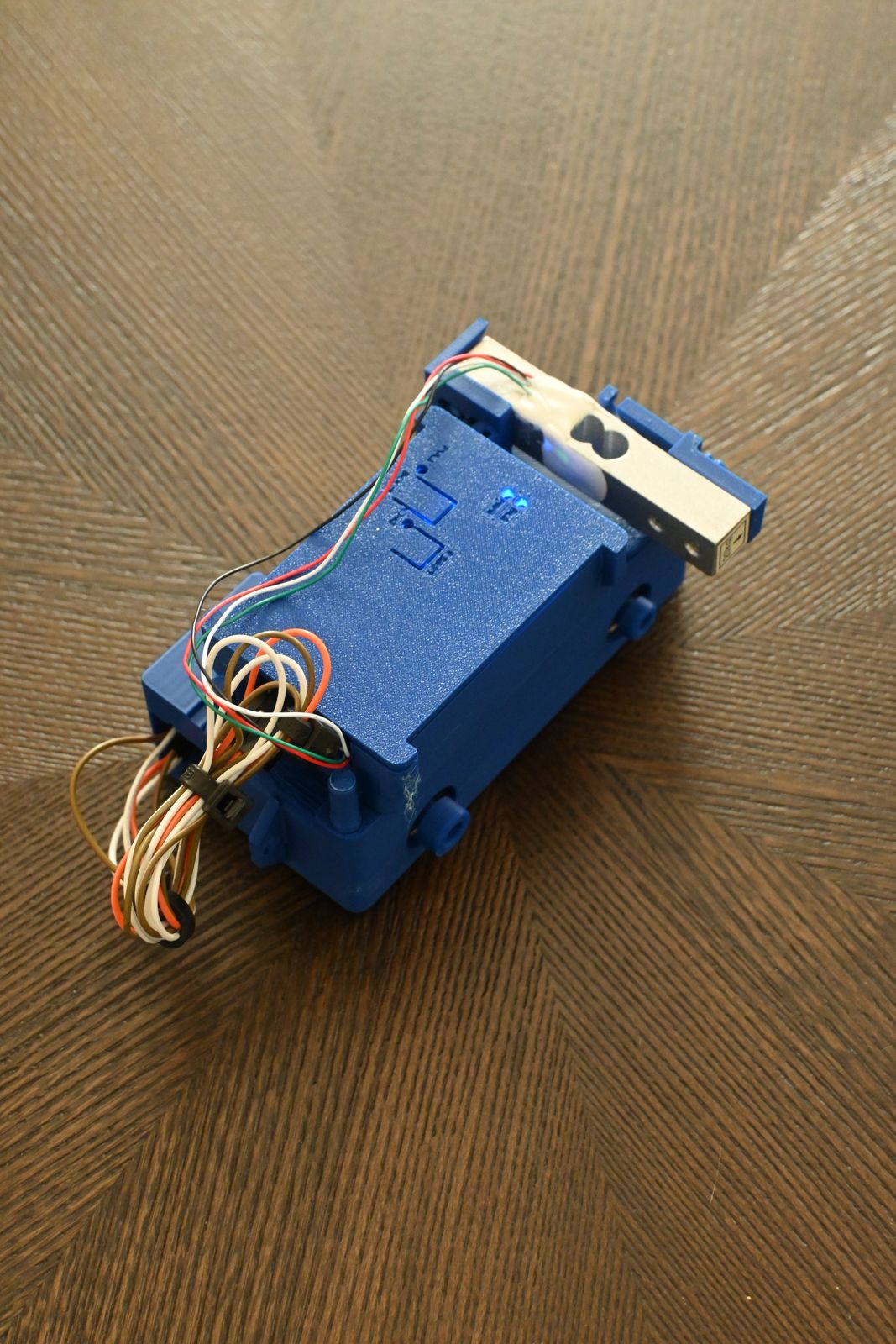
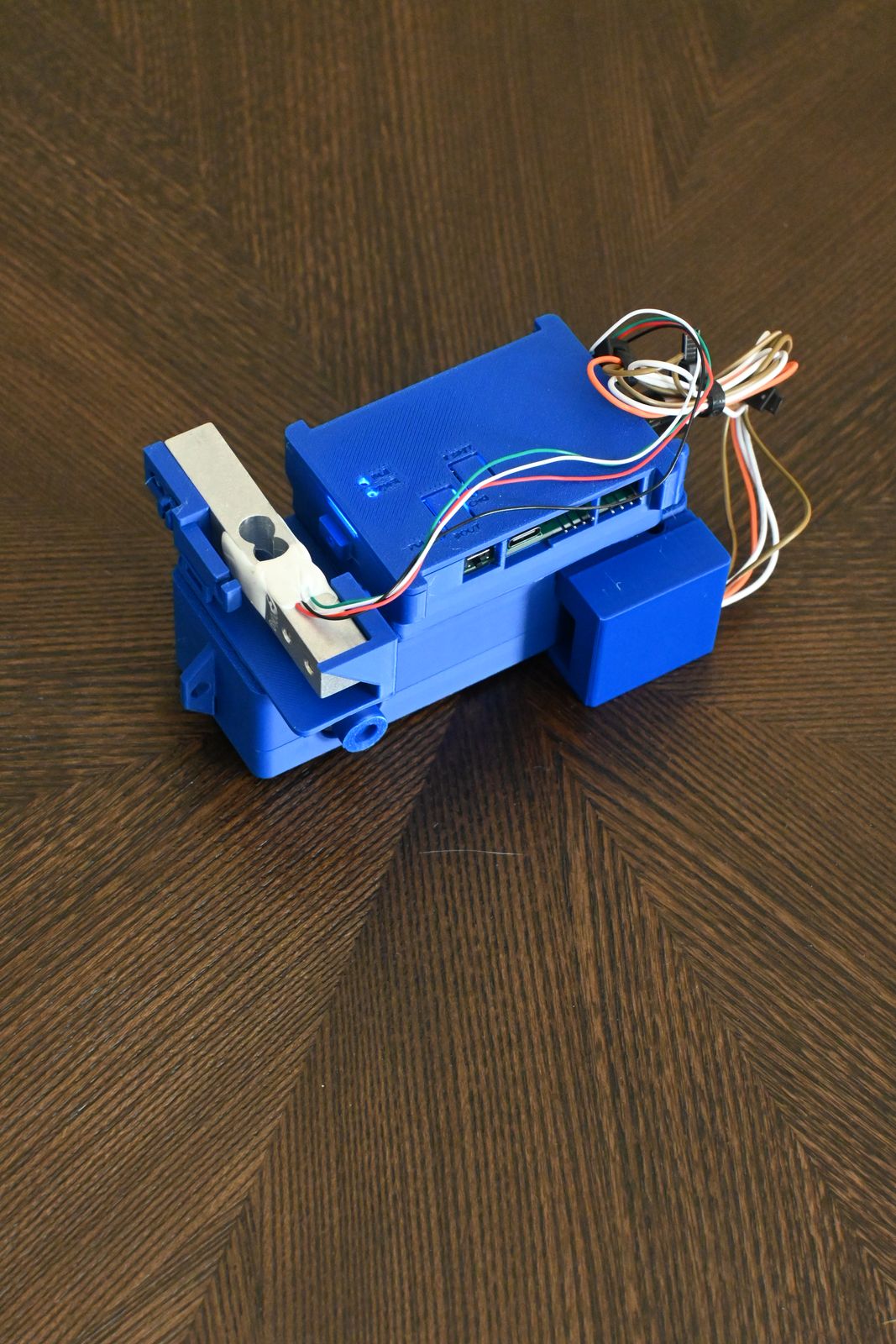
The cart that measures itself.
Two printed halves clamp around the axles, bearings and V-wheels. The Hub docks on top. Nothing glued, nothing forced.
A Ø4 mm magnet spins in the rear axle and an AS5600 reads it 200 times a second — position, velocity and acceleration straight from the wheel.
ESP32-C3, Bluetooth, USB-C charging, a 24-bit force input and two photogate ports — streaming to any browser at 50 Hz.
Position and velocity draw themselves as the cart rolls — the same graphs a PASCO Smart Cart gives, side by side.
A smart cart, a 1 m rail, a marble launcher, springs, a torque balance and a rotation platform — all measured by one small Hub and graphed on any phone. Available to purchase on Shopify.
Built for those who want to excel in physics without paying the premium.
No renders here. This is the cart and rail as printed and wired, photographed on a dining table.
Everything in the box reuses the same printed rail and the same electronics, so one purchase covers mechanics from kinematics to oscillations.
A magnetic encoder in the rear axle counts every 0.02 mm. The Hub docks on the deck; a 20 kg bar load cell rides on the nose. Position, velocity, acceleration and force, live.
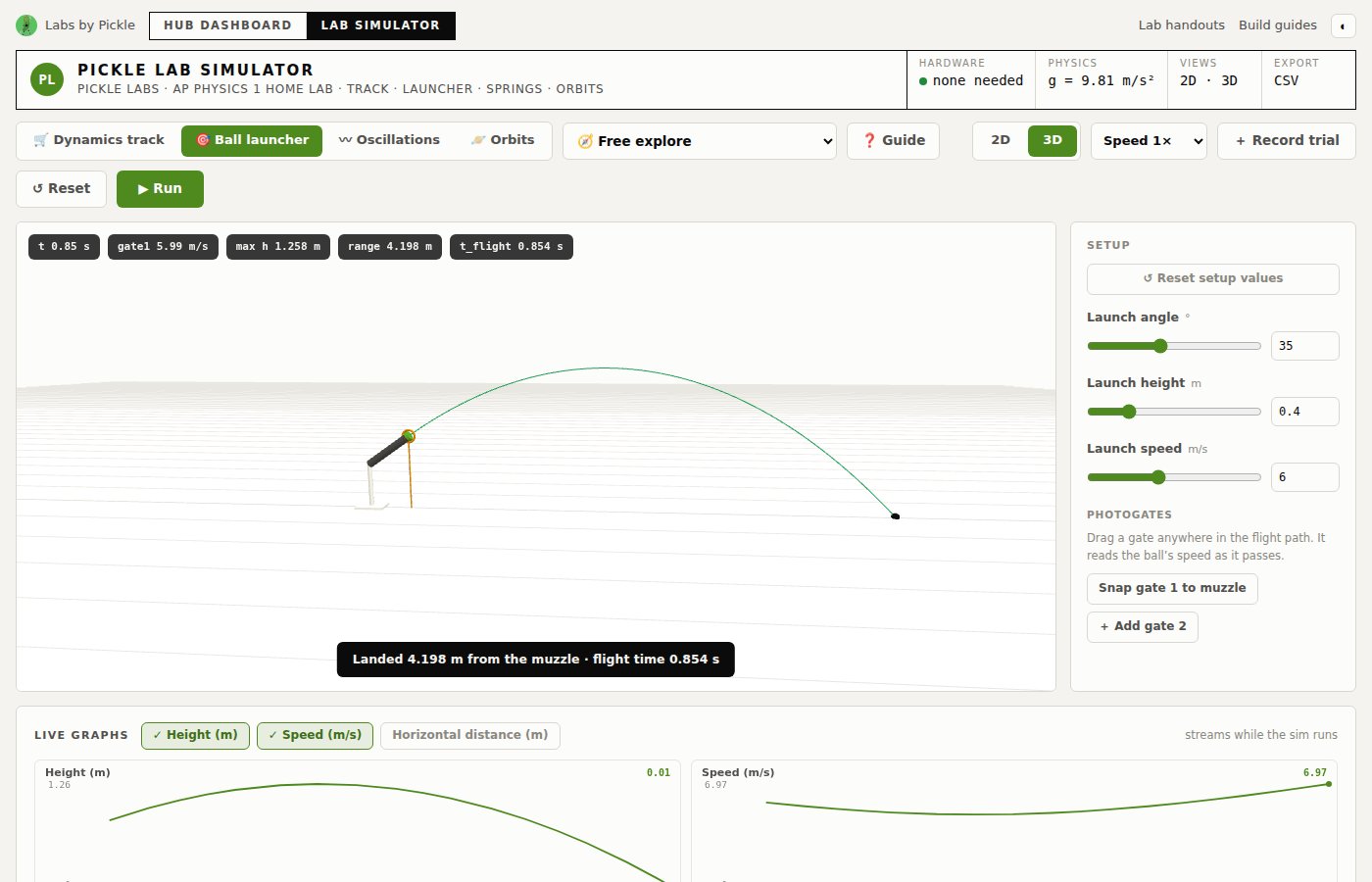
A hardware-store spring fires a 16 mm marble through two photogates 50 mm apart. Launch speed, range, energy and impulse — with five elevation detents from 0° to 60°.
Two springs clip to the rail's end pieces and hook into the cart. Stand the rail up and the same end cap hangs a spring for Hooke's law — and a ruler pivot for the torque lab.
A 120 mm disc on a spindle block that clamps to the rail, read by the same encoder. A hanging mass on the spool gives τ = Iα with numbers that match ½MR² to a few percent.
Each handout comes as Structured, Guided Inquiry and Student Designed, plus Teacher Notes with expected values computed from the kit’s own geometry.
Two gates give v₀; predict where the marble lands; carbon paper decides.
Unit 2 · DynamicsModified Atwood on the rail; friction from the intercept.
Unit 5 · TorqueA ruler on a printed pivot; unknown masses from Στ = 0.
Unit 5/6 · Rotationτ vs α slope is I; compare with ½MR².
Unit 7 · OscillationsT² vs m slope is 4π²/k; energy ½kA² = ½mv²max.
All in the browser, all free. Try them now — both dashboards have a demo mode and the simulator needs no hardware.
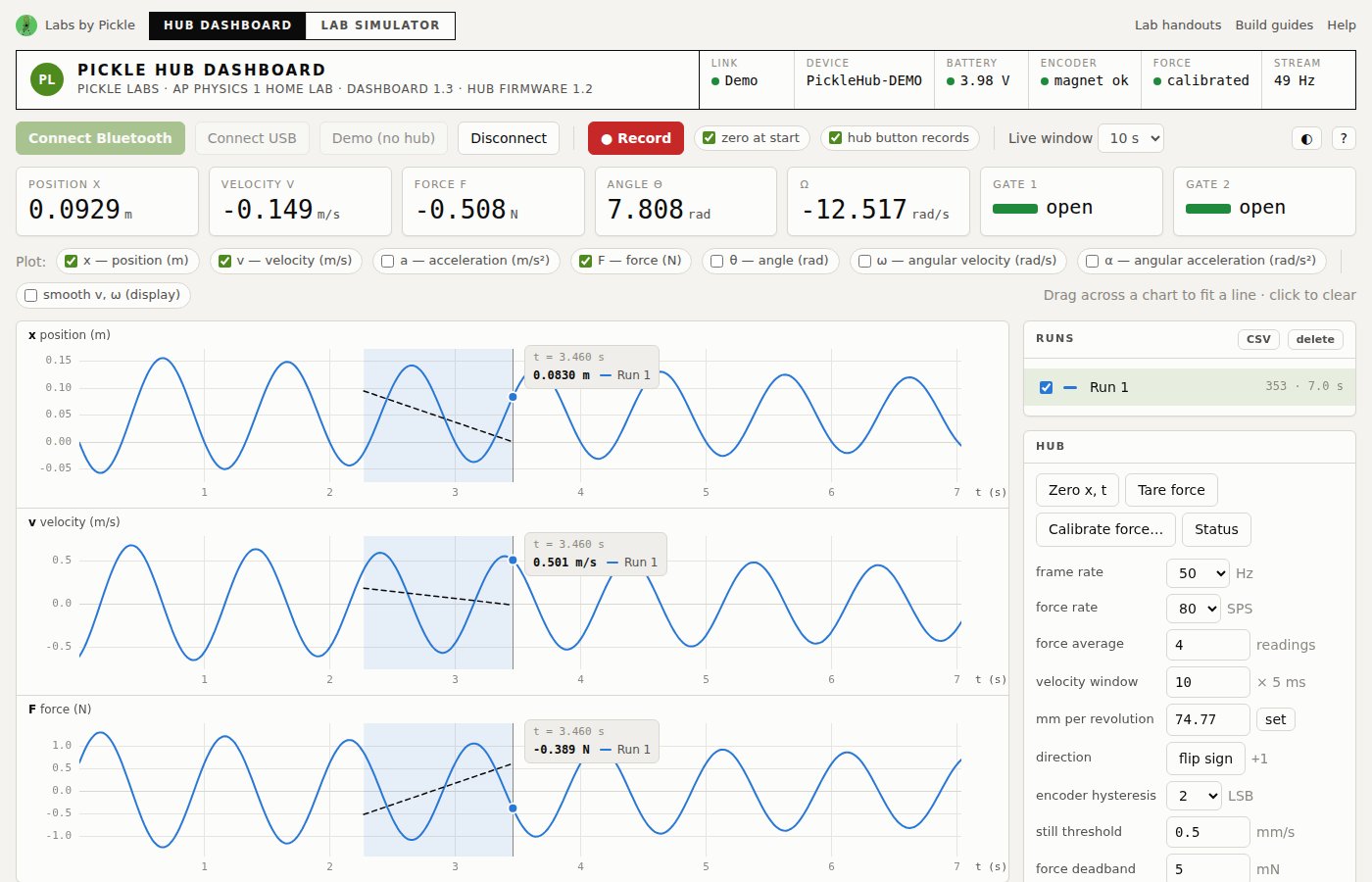
Position, velocity, force and angle from the Hub, with slope fits, runs and CSV export.
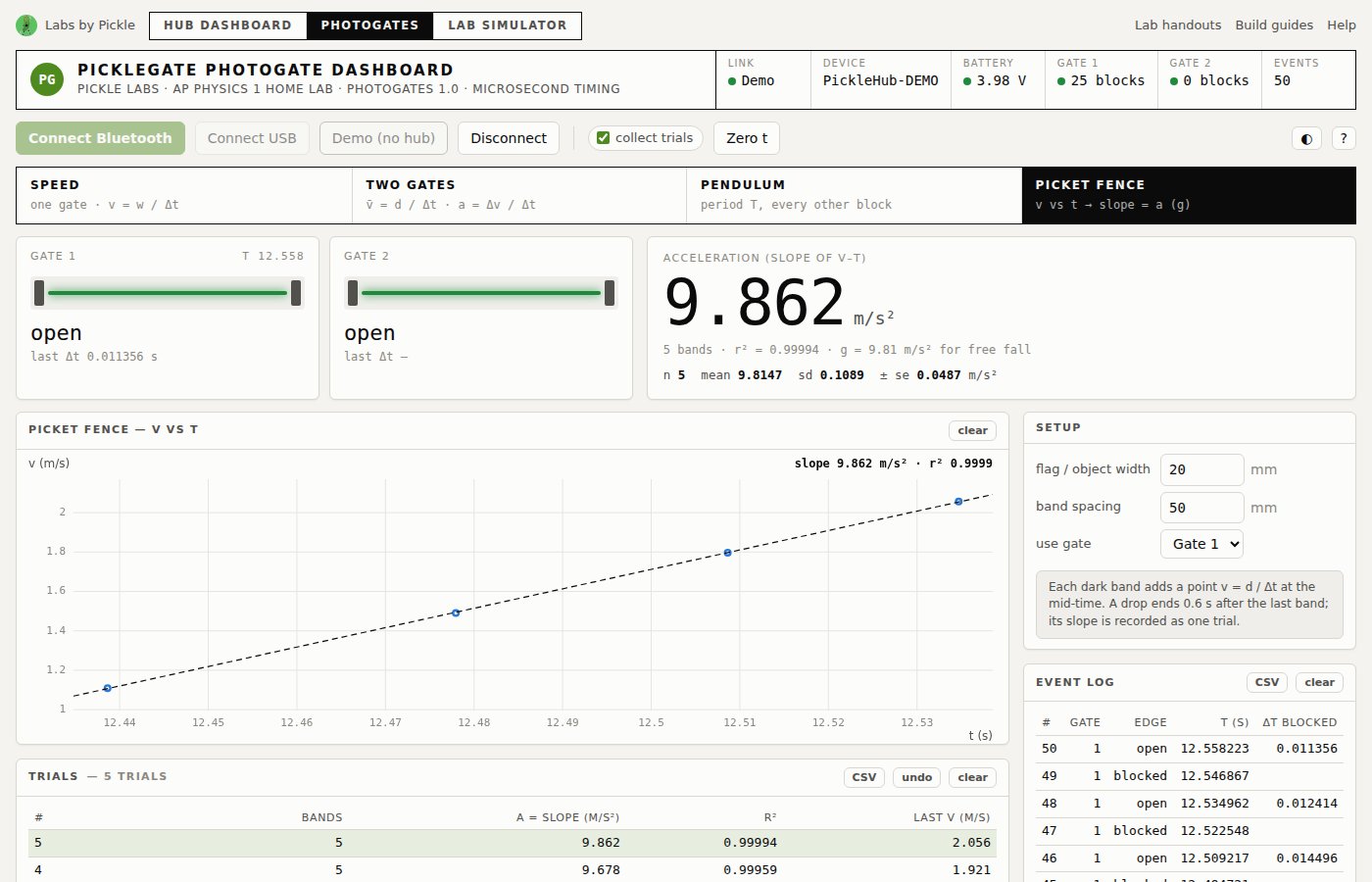
Speed, two-gate acceleration, pendulum period and picket-fence g, with statistics.
Track, launcher, oscillations and orbits — no hardware.
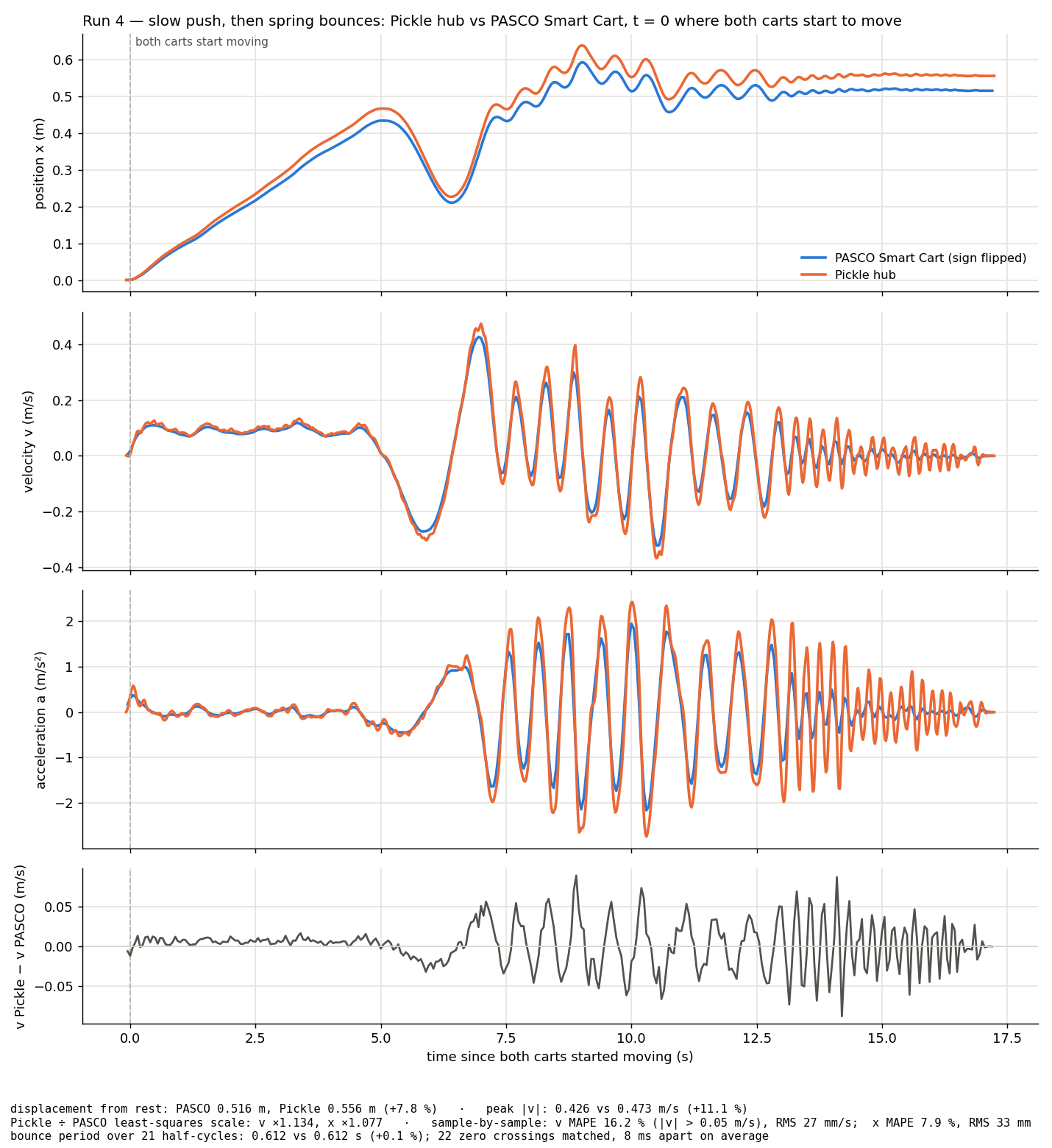
We recorded the Pickle cart and a PASCO Smart Cart side by side. Same shape on every graph; the oscillation period agreed to 0.1 % with 22 zero crossings matched within 8 ms.
A PASCO two-cart dynamics system lists at $659 before the track, photogates or rotation sensor. The Pickle Core kit covers the same five units with one Hub — and every design file is free if you would rather print it yourself.
STL and STEP for all 55 parts, the KiCad project and Gerbers for the Hub, the firmware, the dashboard, thirteen build manuals and five lab handouts.
The Pickle Core kit ships printed, with every bought part in the box. Available to purchase on Shopify.